
Dip powder is built to stay put for weeks, which is great until you want it gone. If you are learning how to remove dip nails at home, the good news is that you do not need a salon drill. You need a file, pure acetone, some patience and about 30 to 45 minutes.
This guide gives you three safe methods with clear steps and real soak times. You will also learn how to spot whether you have dip, gel or acrylic, how to fix a stubborn base layer, and how to care for your nails afterward.
Quick answer: How to remove dip nails at home in 7 steps:
- Clip long nails short.
- File off the shiny top coat until the color looks dull.
- Coat the skin around each nail with petroleum jelly.
- Soak your fingertips in 100% acetone (or use foil wraps) for 15 to 20 minutes.
- Gently push off the softened powder with a wooden cuticle stick.
- Soak 5 more minutes for any stubborn spots. Never pry or peel.
- Wash your hands and apply oil or petroleum jelly.
☰ Jump to a section12 sections
- What You Need
- Is It Dip, Gel or Acrylic? How to Tell Before You Start
- Method 1: Acetone Bowl Soak
- Method 2: Foil Wraps
- Method 3: Warm Water Bowl-in-Bowl
- How to Remove Dip Powder Nails Faster
- Without Acetone: What Works and What Doesn’t
- Troubleshooting
- Aftercare and Nail Recovery
- Frequently Asked Questions
- The Short Version
- Sources
What You Need
Gather everything before you open the acetone.
- 100% pure acetone. A 16 oz bottle costs about $4 to $8 at a drugstore. Regular “nail polish remover” is often diluted and works far slower.
- A coarse file (100 or 180 grit) to break the top coat.
- A buffer block for smoothing at the end.
- Petroleum jelly to protect your skin.
- A small glass or ceramic bowl. Acetone is a strong solvent for many plastics, as the Wikipedia article on acetone explains, so skip plastic bowls.
- Cotton pads and aluminum foil (for Method 2).
- A larger bowl and warm tap water (for Method 3).
- A wooden cuticle stick or a gentle cuticle pusher.
- An old towel to cover your table. Acetone can damage wood finishes and some countertops.
- Cuticle oil or hand cream for aftercare.
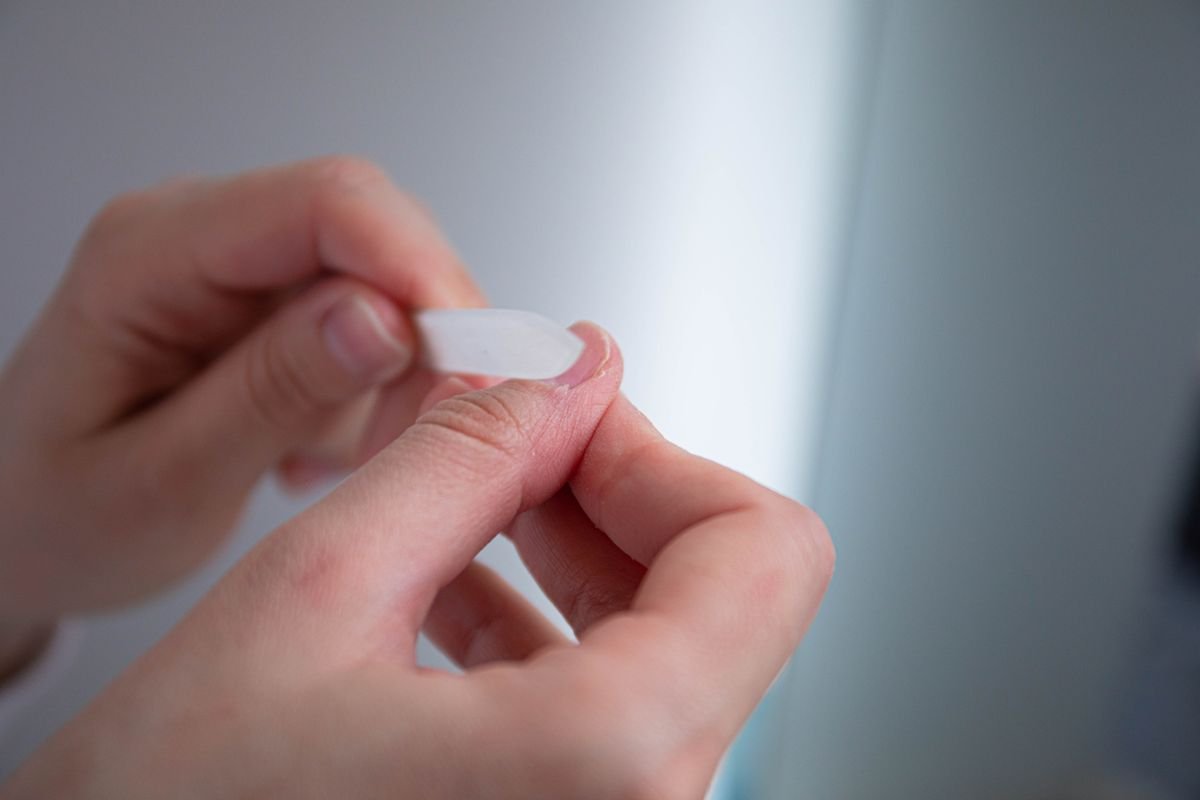
Work near an open window or a running fan. Acetone fumes can cause headaches, dizziness and sore eyes and throat, as the OSHA guide to nail salon chemical hazards notes. The same page says fresh air is the best way to lower the chemicals you breathe.
Is It Dip, Gel or Acrylic? How to Tell Before You Start
All three come off with acetone, but soak times differ. If you did not do the manicure yourself, these clues help.
| Clue | Dip powder | Gel polish | Acrylic |
|---|---|---|---|
| How it was done | Liquid base, then nails dipped in or dusted with powder | Painted on, cured under a UV or LED lamp | Liquid and powder mixed into a bead and sculpted with a brush |
| Lamp used? | No | Yes, after every coat | No |
| Smell at the salon | Mild | Mild | Strong, sharp chemical smell |
| Thickness | Medium to thick, quite even | Thin, close to regular polish | Thick, often with a raised curve near the center |
| Length | Usually your own nail length | Usually your own nail length | Often longer, built on tips or forms |
| Typical acetone soak | 15 to 20 minutes | 10 to 15 minutes | 20 to 30 minutes or more |
If your manicure is gel, follow our step-by-step guide to getting gel polish off instead. It needs less filing. For a fuller look at how these formulas compare, see our guide to every type of nail polish.
Method 1: Acetone Bowl Soak
This is the simplest method. It works best on short nails when you can sit still for 20 minutes.
- Clip and file. Clip off any extra length. Then file the top of each nail with a coarse file until all the shine is gone and the color looks dusty. This step matters most. The top coat seals the powder, and acetone cannot get through it well.
- Protect your skin. Rub a thin layer of petroleum jelly over your cuticles and the skin around each nail. Keep it off the nail itself.
- Pour the acetone. Fill a glass bowl with about 1 inch of acetone, enough to cover your nails when your fingertips rest in it.
- Soak for 15 minutes. Dip only your fingertips, not your whole hand. Set a timer.
- Check one nail. If the powder looks gummy and lifts with light pressure, it is ready. If not, soak 5 more minutes.
- Push it off. Use a wooden stick to slide the soft layers toward the free edge. Push gently, at a low angle. If you feel resistance, soak again.
- Buff and wash. Lightly buff away any thin film. Wash with mild soap and warm water, then moisturize.
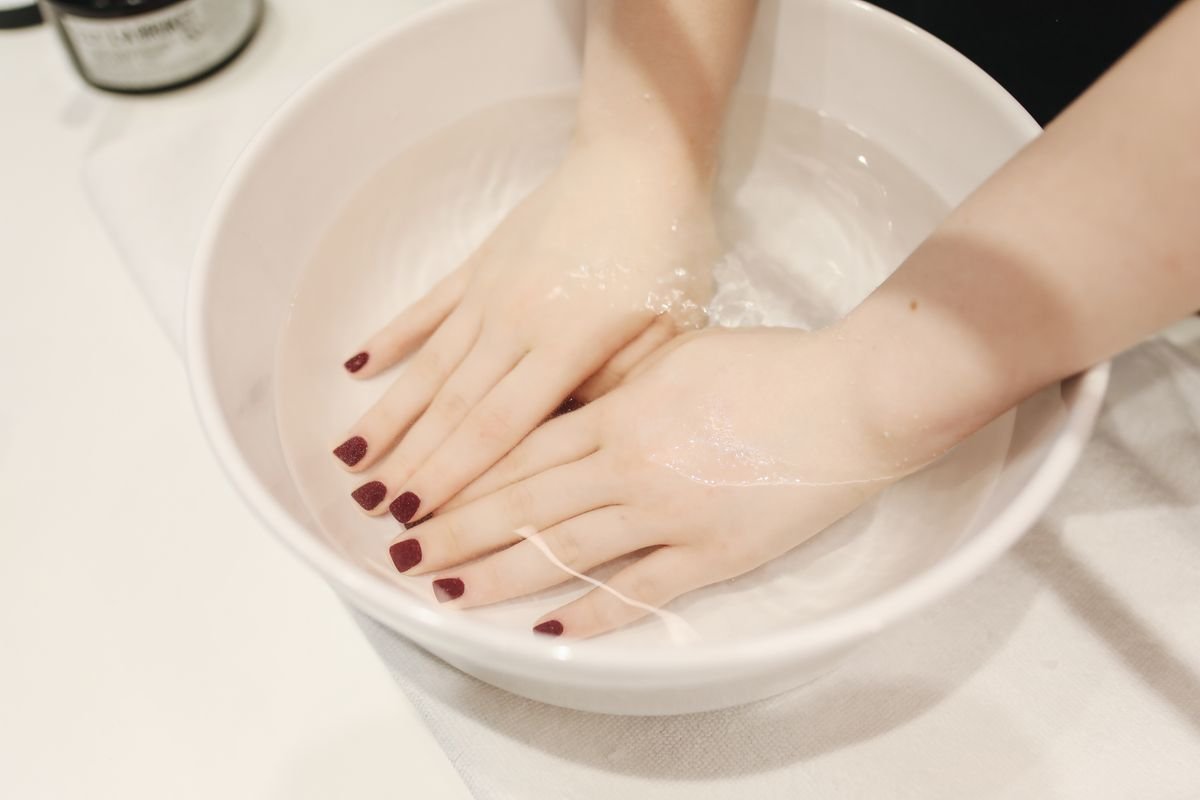
Method 2: Foil Wraps
Foil wraps use less acetone and keep the liquid off most of your skin. They suit people with dry or sensitive hands. The trade-off is that the wraps make it hard to use your hands while you wait.
- File the top coat off every nail until the surface looks matte.
- Apply petroleum jelly around each nail.
- Cut cotton pads into pieces a little bigger than your nails. A quarter of a pad fits most nails.
- Soak each piece in acetone and press it flat onto the nail.
- Wrap each fingertip with a 3 x 3 inch square of foil. Pinch it snug at the top so the acetone stays warm and does not evaporate. Do not wrap so tight that it pinches.
- Wait 15 to 20 minutes. Rest your hands on a towel. Wrapping one hand at a time is easier if you live alone.
- Press and twist. Press down on the foil and twist it off as you pull. Much of the powder should come with the cotton. Push off what is left with a wooden stick.
- Rewrap any stubborn nails for 5 more minutes. Then wash and moisturize.
The American Academy of Dermatology’s removal guide suggests plastic food wrap as an option too, since it seals tightly and drips less than foil. Either one works for dip.
Try the free Nail Color Matcher
See which polish colors suit your skin tone. Free, no sign-up.
Method 3: Warm Water Bowl-in-Bowl
Slightly warm acetone works faster. This method warms it safely and can cut about 5 minutes off your soak.
Safety first: Never heat acetone on a stove, in a microwave, with a hair dryer or near a candle. Acetone is highly flammable. The CDC NIOSH Pocket Guide entry for acetone lists its flash point at 0°F, which means it gives off vapor that can catch fire even in a cold room. Warm water is the only heat source you should use.
- File off the top coat and apply petroleum jelly, just like the methods above.
- Fill a large bowl halfway with warm tap water. It should feel like a comfortable bath, not hot. Do not boil water for this.
- Pour acetone into a smaller glass bowl, about 1 inch deep.
- Set the small bowl inside the large one. Make sure no water splashes into the acetone, because water slows it down.
- Wait 2 to 3 minutes for the acetone to warm.
- Soak your fingertips for 10 to 15 minutes. Check one nail at 10 minutes.
- Push off the softened powder with a wooden stick, then wash and moisturize.
Keep the bowls away from the stove, a lit fireplace and anyone smoking.
How to Remove Dip Powder Nails Faster
Filing saves the most time. A sealed top coat can double your soak, so file until no shiny patches are left.
Other ways to speed things up:
- File down most of the bulk. If your dip is thick, file away about half the color layer before soaking. Stop well before you reach your natural nail.
- Use fresh, 100% acetone. An old, half-empty bottle left open loses strength.
- Warm the acetone safely with the bowl-in-bowl method.
- Scrape in rounds. Push off the soft top layer at 10 minutes, then soak again. Fresh acetone reaches the lower layers faster.
| Method | Prep (filing) | Soak time | Total time, 10 nails | Acetone used | Best for |
|---|---|---|---|---|---|
| Warm bowl-in-bowl | 8 to 10 min | 10 to 15 min | About 30 to 35 min | About 3 oz | Fastest home result |
| Acetone bowl soak | 8 to 10 min | 15 to 20 min | About 35 to 40 min | About 3 oz | Simple setup, short nails |
| Foil wraps | 8 to 10 min | 15 to 20 min | About 40 to 45 min | About 1 oz | Dry or sensitive skin |
| Non-acetone remover | 8 to 10 min | 50 min or more | Often over 1 hour | A lot | Not recommended for dip |
Without Acetone: What Works and What Doesn’t
Here is the honest answer on “no acetone” tricks: almost none of them work well on dip powder.
The reason is the chemistry. Most dip liquids are a type of cyanoacrylate, the same family of glue used for nail tips. According to the Wikipedia article on cyanoacrylate, acetone is a common solvent that can soften this glue once it has hardened. The same article notes that water actually triggers the glue to harden. So soapy water alone does very little.
| Method | Does it work on dip? | What actually happens |
|---|---|---|
| Non-acetone polish remover | Barely | It may soften the top layer after a long soak. The base layers usually stay stuck. |
| Warm soapy water | No | It can loosen the edges a little, which tempts you to peel. Peeling takes nail layers with it. |
| Oil soaks (olive or coconut) | No | Nice for your cuticles, but oil does not dissolve the powder. |
| Rubbing alcohol | Poorly | It dries out your skin and only dulls the surface. |
| Filing it all off | Yes, with risk | It works, but it is very easy to file into your natural nail. Thin, sore spots are common. |
If you truly cannot use acetone, the safest choice is a careful file-off at a salon, where the tech can see when they reach your natural nail. At home, stick with acetone and protect your skin well.
Troubleshooting
The base layer will not come off
The base sits closest to your nail and gets the least acetone. Do not scrape harder. Rewrap that nail with a fresh acetone pad for 5 to 10 minutes, then push again. A thin film that stays after two extra soaks can be removed with a soft buffer, using light strokes.
Only the top layer is lifting
This almost always means the top coat was not fully filed through. The acetone softened the part it could reach and stopped there. Dry the nail, file again until it looks completely dull, and soak for another 10 minutes.
The acetone does not seem to work at all
Check the label. If it says “nail polish remover” with other ingredients listed first, it is not pure acetone. Also check that water did not get into your bowl.
My skin is dry, white or stinging
Acetone strips oil from your skin. Wash your hands right away, then rub petroleum jelly into your cuticles and fingertips. If your skin cracks or keeps burning, take a break of a few days before your next manicure. For broader warning signs, try our nail health checker.
My nails look white or rough after removal
White, chalky patches are usually dehydrated top layers of the nail. They often fade within a day or two once you moisturize. Rough spots mean some surface layers came off, so buff very lightly and let them grow out.
Aftercare and Nail Recovery
Your nails will feel thinner right after removal, even if you did everything right. A 2019 review on brittle nails states that all methods of removing applied nail products damage healthy nail plates. A simple routine helps them recover.
| When | What to do |
|---|---|
| Right after removal | Wash with mild, fragrance-free soap. Apply petroleum jelly or cuticle oil. |
| Days 1 to 7 | Rub petroleum jelly into your cuticles and the skin around your nails every day. |
| Weeks 1 to 2 | Keep nails short and bare, or use only regular polish. Moisturize several times a day. |
| About 6 months | Any damaged nail has fully grown out and been replaced. |
The one-week petroleum jelly routine comes straight from the AAD’s at-home removal guide, which also notes that fingernails take about six months to grow out. Toenails take 12 to 18 months. The AAD’s tips for healthy nails after gel manicures also suggest a break of a couple of weeks or more between sets, with a moisturizer applied several times a day.
Keeping nails short during recovery helps too. The brittle nail review notes that longer nails lose water faster. A short, rounded shape also snags less. Our guide to nail shapes shows which shapes hold up best on weak nails.
Before your next set, compare options with our gel vs regular vs press-on nails tool, or pick a color from our fall nail ideas.
Frequently Asked Questions
Can you peel dip nails off?
No. Dip powder bonds tightly to the top layers of your nail, so peeling pulls those layers off with it. That leaves your nails thin, sore and prone to splitting for months.
Is dip harder to remove than gel?
Yes, a little. Dip is thicker and has a hard top coat, so it needs more filing and about 5 extra minutes of soaking. Gel usually lifts after 10 to 15 minutes in acetone.
How long should you soak dip nails in acetone?
Plan on 15 to 20 minutes after filing off the top coat, or 10 to 15 minutes with warm acetone. Thick sets may need one or two extra 5 minute soaks.
Do dip nails ruin your nails?
Dip itself does not ruin nails, but rough removal and back-to-back sets can thin them. Gentle acetone removal, regular moisturizing and a short break every few sets keep most nails healthy.
Can you keep the base layer and redo your dip?
Some salons file the color down to a thin base and rebuild on top. At home it is safer to remove everything, because lifted base layers can trap water and dirt under the new set.
The Short Version
Filing off the top coat matters more than any other step. After that, pure acetone and 15 to 20 minutes of soaking will lift most dip sets. Use warm water if you want to speed it up, and never put acetone near a flame or heat source.
Skip the peeling and the acetone-free tricks. Give your nails a week of petroleum jelly and a short break before your next set. When they feel strong again, our winter nail ideas are ready for your next manicure.
Sources
- American Academy of Dermatology: Dermatologist’s secret for removing gel nail polish at home
- American Academy of Dermatology: Gel manicures, tips for healthy nails
- CDC NIOSH Pocket Guide to Chemical Hazards: Acetone
- OSHA: Health Hazards in Nail Salons, Chemical Hazards
- Wikipedia: Acetone
- Wikipedia: Cyanoacrylate
- Pathogenesis, Clinical Signs and Treatment Recommendations in Brittle Nails: A Review (Dermatology and Therapy, 2019)