
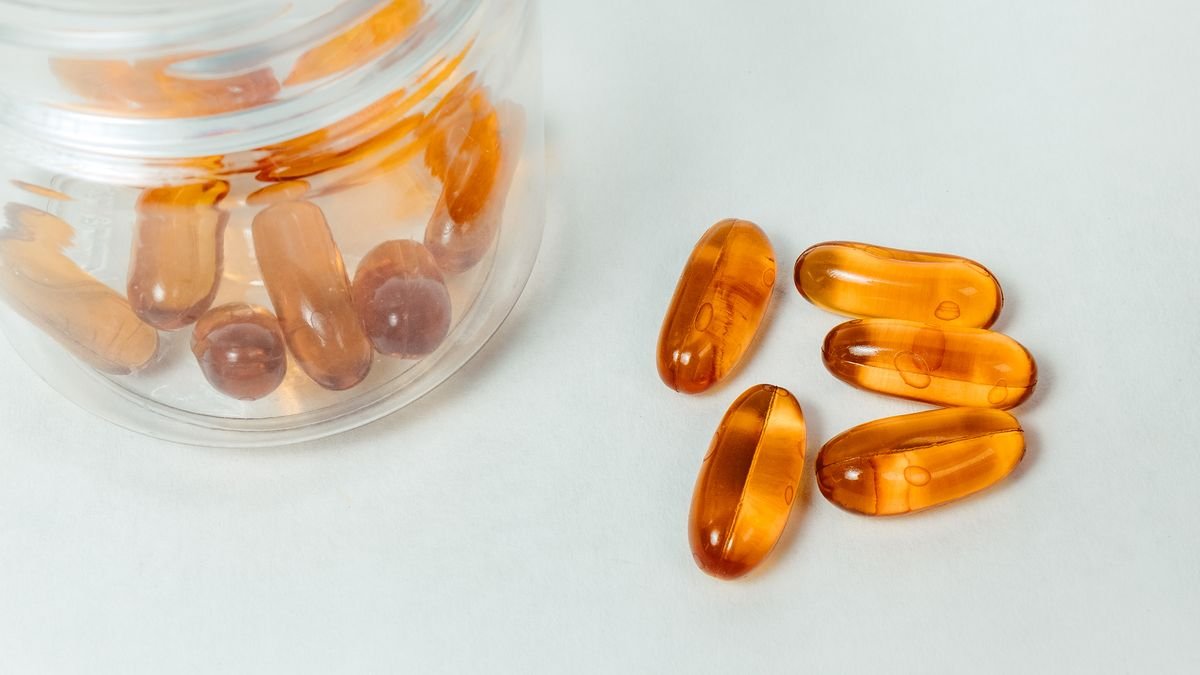
Biotin is the supplement most people reach for when their nails peel or snap. Hair, skin and nail gummies often contain 50 to 100 times more of it than your body needs in a day. The question is whether it actually works, and whether taking that much is safe.
The short answer: biotin may help some people with brittle nails, but the research behind it is small and old, and high doses can throw off important blood tests. This guide walks you through what the studies found, who is most likely to benefit, the doses used, and how to take it without causing problems at your next checkup.
Quick answer: Three small studies from the late 1980s and 1990s found that 2.5 mg of biotin a day made nails firmer or thicker in many people with brittle nails. None of them compared biotin with a placebo, so the results are weak. Biotin is not known to be toxic, but doses well above the daily need can cause false results on thyroid and heart tests. Tell your doctor before any blood work if you take it.
☰ Jump to a section11 sections
- What Biotin Is and What It Does
- What the Research Actually Shows
- The Limitations You Should Know
- Who Might Benefit From Biotin
- How Much Biotin People Take for Nails
- Is Biotin Safe?
- What Works Better Than Biotin Alone
- Should You Try Biotin? A Simple Decision Guide
- Frequently Asked Questions
- The Bottom Line
- Sources
What Biotin Is and What It Does
Biotin, also called vitamin B7, is a water-soluble B vitamin. Your body uses it to help enzymes break down fats, carbohydrates and protein. It also plays a part in making keratin, the protein that forms your nails and hair.
Adults need about 30 mcg (0.03 mg) a day. That is the adequate intake set by the US Food and Nutrition Board. There is no official recommended dietary allowance because there is not enough data to set one.
Most people get enough from food. A cooked egg has about 10 mcg, 3 ounces of cooked beef liver has about 31 mcg, and smaller amounts come from salmon, pork, sunflower seeds and sweet potato.
What the Research Actually Shows
When dermatologists talk about biotin for nails, they point to the same three studies. Together they included only about 80 people with brittle nails, and all three used the same dose: 2.5 mg (2,500 mcg) a day.
Study 1: Firmer nails in 41 of 45 people
A German study gave 2.5 mg of biotin a day to 71 people with brittle nails. Of the 45 who were evaluated, 41 (91%) had firmer, harder nails after an average of 5.5 months.
Study 2: Thicker nail plates in a small group
A follow-up study compared 22 women taking biotin with 10 healthy volunteers who took nothing. In the 8 patients who had nail samples taken before and after, the nail plate got 25% thicker. In 14 others, it only rose 7%, and the NIH notes that difference was not statistically significant.
Study 3: Improvement reported by 63%
A retrospective study asked 35 people who had taken 2.5 mg a day for 6 to 15 months how their nails changed. Twenty-two of them (63%) said their nails improved.
The Limitations You Should Know
These results sound good, so why do dermatologists still call the evidence weak? Dr. Shari Lipner, a nail specialist, summed it up at the American Academy of Dermatology meeting in 2023: there have been studies of only 80 patients, done about 25 years ago, and that is all of the evidence for biotin.
- No placebo group. Without a group taking a dummy pill, you cannot tell whether nails improved because of biotin, because people also took better care of their nails, or because nails simply grow out over time.
- Small numbers. Fewer than 100 people in total is too few to draw firm conclusions.
- Biotin levels were not checked. The studies did not report whether participants were low in biotin to begin with. If some were deficient, that would explain why they improved.
- Self-reported results. Study 3 relied on people’s own opinion of their nails, which is easy to sway.
- No new trials. Larger, controlled studies have not been done since.
A 2017 review in Skin Appendage Disorders found 18 published cases where biotin improved hair or nails. Every one of those people had an underlying condition, such as a genetic biotin disorder or brittle nail syndrome. The authors concluded there is not enough evidence to recommend biotin for healthy people.
Who Might Benefit From Biotin
True biotin deficiency is rare. Lipner notes that very few people are deficient except those with inherited enzyme problems, and most people get all they need from a normal diet. Biotin is more likely to help in these groups:
| Group | Why biotin may be low |
|---|---|
| People with biotinidase deficiency | A rare inherited disorder that stops the body from recycling biotin |
| People with alcohol dependence | Alcohol reduces biotin absorption |
| Pregnant and breastfeeding women | The body uses biotin faster. The Linus Pauling Institute reports that at least one third of women develop marginal deficiency during pregnancy |
| Long-term users of some seizure medicines | Primidone, phenytoin and carbamazepine can lower biotin levels after long use |
| People who eat raw egg whites often | A protein in raw egg white, avidin, binds biotin and blocks absorption. Cooking the egg breaks avidin down |
| People with brittle nails and no clear cause | This is the group the three small nail studies looked at |
Signs of real deficiency go beyond nails. They include thinning hair, a scaly red rash around the eyes, nose and mouth, and in more serious cases tingling in the hands and feet, low mood and tiredness. If you have these, see a doctor rather than treating yourself.
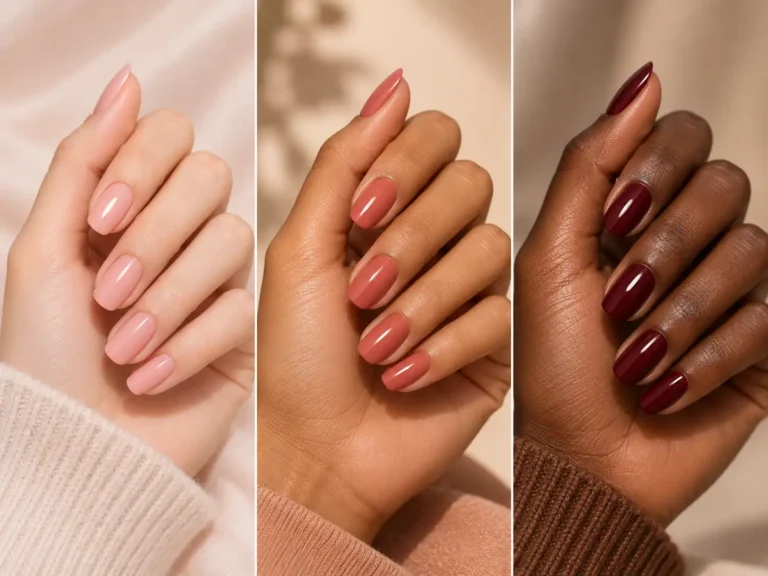
Try the free Nail Color Matcher
See which polish colors suit your skin tone. Free, no sign-up.
How Much Biotin People Take for Nails
| Amount | What it is |
|---|---|
| 30 mcg (0.03 mg) | Adequate daily intake for adults, easily met by food |
| 35 mcg | Adequate intake while breastfeeding |
| 2,500 mcg (2.5 mg) | Dose used in all three nail studies |
| 5,000 mcg (5 mg) | A common dose in nail supplements, and one some dermatologists suggest |
| Up to 100 mg | Found in some hair, skin and nail products, according to the FDA |
Read your label closely. Brands list biotin in mcg, mg or as a percentage of the daily value, and a product showing “16,667% DV” contains about 5 mg. More is not better here. No study has shown that doses above 2.5 mg work better for nails, and higher doses raise the risk of lab test errors.
How long before you see results?
Fingernails grow slowly, about 3 mm a month, so it takes roughly 6 months to replace a whole nail. In the studies, people took biotin for 2 to 15 months. If you decide to try it, judge it on the new growth near your cuticle after 3 months, and on the whole nail after 6. If nothing has changed by then, it is unlikely to help you.
Is Biotin Safe?
Biotin has a good safety record. The Food and Nutrition Board did not set an upper limit because no harmful effects have been proven. The Linus Pauling Institute reports that 5 mg a day for two years caused no side effects in healthy people, and much higher doses were tolerated in medical studies. Extra biotin leaves the body in urine.
The real risk is not to your body. It is to your test results.
The lab test problem
Many blood tests use a biotin-based method to detect hormones and proteins. When your blood holds a lot of biotin, it can block that method and give a result that is falsely high or falsely low.
- Heart tests. Troponin is the blood test used to diagnose a heart attack. The FDA first warned about biotin in 2017 after a person taking high-dose biotin died following a falsely low troponin result. It repeated the warning in 2019.
- Thyroid tests. The NIH lists case reports where biotin made thyroid results look like Graves’ disease or an overactive thyroid. In one report, a single 10 mg dose affected thyroid tests done within 24 hours.
- Other tests. Other hormone tests that use the same method can also be affected, depending on the lab equipment.
The FDA says there is not enough information to know exactly how long you should stop biotin before a test to be safe. That is why the safest step is simple: tell your doctor and the lab that you take biotin, including any hair, skin and nail gummy or multivitamin that contains it, and follow their advice.
Other safety points
- Talk to your doctor before taking biotin if you are pregnant, breastfeeding or take seizure medicine.
- Check every supplement you take. Biotin is often hidden in multivitamins, B-complex pills and beauty blends, so you may be taking more than you think.
- Supplements are not checked by the FDA for strength before they are sold. Look for a product tested by an independent group such as USP or NSF.
What Works Better Than Biotin Alone
Because biotin’s proof is limited, dermatologists put nail care first. These steps protect the nail you already have while new growth comes in:
- Cut down on water exposure. Wear waterproof gloves for dishes and cleaning, with cotton gloves underneath if your hands sweat.
- Moisturize nails and cuticles. Apply hand cream after washing and cuticle oil at night.
- Keep nails short and filed smooth. Short nails catch and bend less.
- Give your nails breaks from gel and acrylic. Removal thins the nail plate.
- Eat enough protein and iron. Low iron is a more common nail problem than low biotin. Ask your doctor about a blood test if you are tired, pale or your nails curve upward like a spoon.
Lipner also notes that no well-designed trials support other popular nail supplements, such as vitamin D, amino acids or chromium, for brittle nails. For a quick check of other nail changes, try our Nail Health Checker.

Should You Try Biotin? A Simple Decision Guide
- Your nails peel only at the tip and you wash your hands a lot: Start with gloves and moisturizer. Biotin is unlikely to fix damage from water.
- Your nails got weak after months of gel: Take a break and let them grow out first.
- Your nails are brittle with no clear cause and you have ruled out health issues: A trial of 2.5 mg a day for 6 months is a reasonable choice. Tell your doctor first.
- You also have hair loss, a facial rash or tingling: See a doctor to check for deficiency or another cause.
- You have a blood test coming up or a heart condition: Talk to your doctor before taking any high-dose biotin.
Frequently Asked Questions
Does biotin really work for nails?
It may help some people with brittle nails, but the proof is limited to three small studies without placebo groups. It is most likely to help people who are low in biotin, which is uncommon.
How much biotin should I take for nails?
The studies used 2.5 mg (2,500 mcg) a day. Many supplements contain 5 mg or more, but there is no evidence that higher doses work better. Ask your doctor before starting.
How long does biotin take to work on nails?
Expect to wait at least 3 months to see stronger growth at the cuticle and about 6 months for a full nail to grow out. In the studies, improvement was measured after 2 to 15 months.
Can you take too much biotin?
Biotin is not known to be toxic, and no upper limit has been set. The main risk of high doses is false results on blood tests, including thyroid and troponin tests.
Should I stop biotin before a blood test?
Ask your doctor. The FDA says there is not enough data to name a safe stopping window for every test, so your doctor and lab are the best guide. Always mention biotin and any beauty supplements on your medication list.
Can I get enough biotin from food?
Yes, most people do. Eggs, salmon, beef, pork, sunflower seeds and sweet potato all contain biotin. Cook your eggs, because raw egg white blocks biotin absorption.
Does biotin help hair as well as nails?
Only in people who are deficient or have certain rare conditions. Reviews have found no good evidence that biotin helps hair growth in healthy people.
The Bottom Line
Biotin is a low-risk supplement with a small amount of evidence behind it for brittle nails. If you try it, use a moderate dose such as 2.5 mg, give it 6 months, and keep up with gloves, moisturizer and short nails at the same time. Most importantly, tell your doctor you take it, because high-dose biotin can hide the results of tests that really matter.
Sources
- NIH Office of Dietary Supplements: Biotin Fact Sheet for Health Professionals
- NIH Office of Dietary Supplements: Biotin Fact Sheet for Consumers
- Linus Pauling Institute, Oregon State University: Biotin
- Soleymani T, et al. A Review of the Use of Biotin for Hair Loss. Skin Appendage Disorders, 2017
- MDedge Dermatology: Limited treatment options exist for brittle nail syndrome (AAD 2023)
- TCTMD: FDA reminds clinicians about biotin interference with troponin tests