
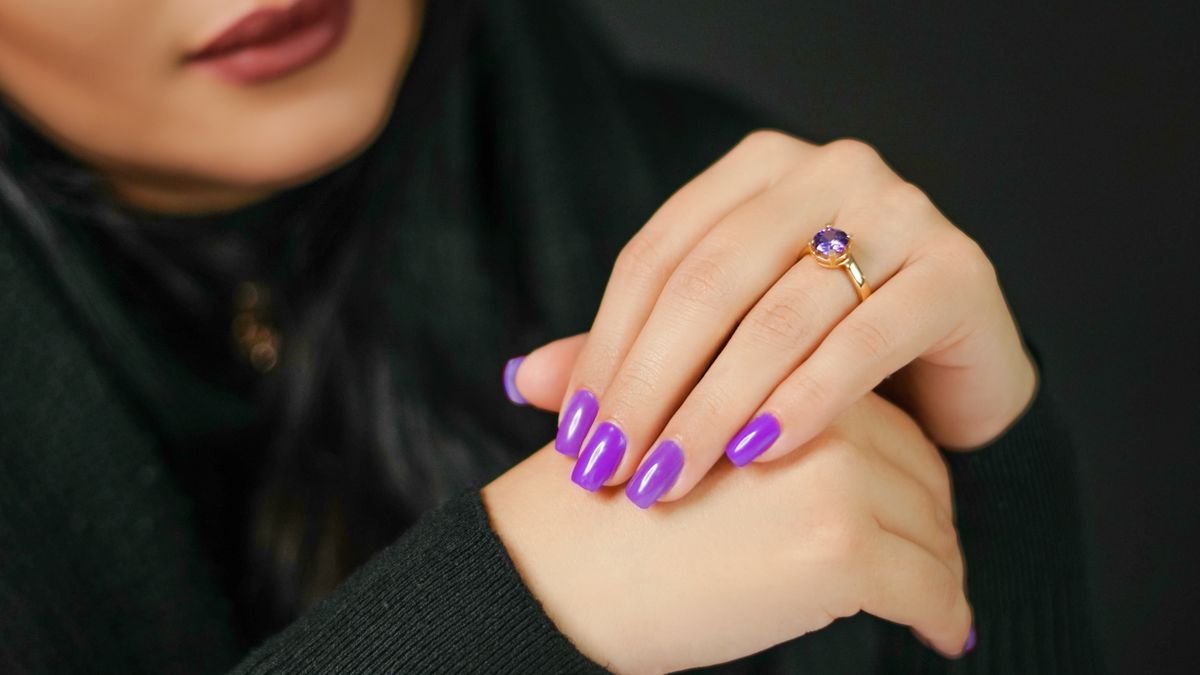
Most people pick a nail shape once and never think about it again. Then a corner snags a sweater, or a nail splits the week before a party, and the shape suddenly matters. Round and square nails are the two shapes I file most often, and they behave very differently in daily life.
This guide puts them side by side. You will see how each one holds up, which suits your fingers, the best length in millimeters, and how to file both at home with a plain emery board. If you can’t decide, there is a middle option too.
Quick answer: Choose round nails if you type, cook, garden or break nails often. The curved tip has no corners to catch, so it chips less and looks good short. Choose square nails if your nails are strong and you want a clean, flat edge for French tips. Can’t decide? Pick squoval, a square tip with softened corners.
☰ Jump to a section12 sections
- Round and Square Nails Side by Side
- Round vs Square Nails Compared
- Which Shape Breaks Less?
- Which Shape Suits Your Fingers and Nail Beds
- Square Round Nails (Squoval): The Middle Option
- How to File Round Nails Step by Step
- How to File Square Nails Step by Step
- How to Switch Between Round and Square
- Design Ideas for Each Shape
- Frequently Asked Questions
- Pick the Shape That Fits Your Day
- Sources
Round and Square Nails Side by Side
The difference sits at the very tip. Both shapes keep the sides of the nail straight. A round nail then curves over the top in an arc that copies your fingertip. A square nail runs flat across and turns a sharp 90 degree corner on each side.
Look at the gold circles on the square nail. Those two points take most of the knocks, so they are where square nails chip first. The round nail spreads any bump along its whole curve.
For the full set of shapes, including almond and stiletto, see our guide to every nail shape.
Round vs Square Nails Compared
Here is how round and square nails stack up on the things you notice day to day. Lengths are for the free edge, the white part that grows past your fingertip.
| Feature | Round | Square |
|---|---|---|
| Strength | Very strong, no weak corners | Medium, corners chip under pressure |
| Snagging | Rarely catches on fabric or hair | Corners catch on knits, tights and zippers |
| Look | Soft, natural, tidy | Crisp, bold, a bit retro |
| Best free edge length | 1 to 3 mm | 3 to 6 mm |
| Best hands | Short fingers, small or wide nail beds | Long, slim fingers and narrow nail beds |
| Upkeep | Light file every 7 to 10 days | Re-square corners every 5 to 7 days |
| Polish wear | Tip wear is spread out, less obvious | Tip wear shows first at the corners |
Square needs a bit more length because a flat edge on a 1 mm free edge just looks blunt. Round works at almost zero length, which is why many people with jobs that are hard on hands keep it.
Which Shape Breaks Less?
Round wins, and dermatologists agree. The American Academy of Dermatology tells you to cut nails straight across and then round them slightly at the tips for maximum strength. Mayo Clinic gives the same advice: trim straight across, then round the tips in a gentle curve.
The reason is simple. A sharp corner is a small, thin point. When you press a key, open a drawer or pull on a sock, force gathers in that point and the nail splits or peels there. A curve has no single point, so the same force spreads out.
Square nails still work for many people. They hold up best when:
- Your nails are naturally thick and don’t peel.
- You wear gel or a builder base, which adds a hard layer on top.
- You keep the free edge at 6 mm or less, so the tip doesn’t act as a lever.
- You don’t use your nails to scrape labels or open cans. The AAD warns this can chip, split or lift the nail.
If your nails bend or peel easily, start with round. You can always square them later once they are stronger.
Which Shape Suits Your Fingers and Nail Beds
Shape changes how long and slim your fingers look. A curved tip draws the eye forward and makes the nail read as longer. A flat tip stops the eye in a straight line, which adds width.
Round suits you if:
- Your fingers are short or your hands are small.
- Your nail beds are wide or short (shorter than they are wide).
- You want your nails to look clean with almost no free edge.
Square suits you if:
- Your fingers are long and slim.
- Your nail beds are narrow and longer than they are wide.
- You like a strong graphic edge for French tips or block colors.
A quick test: paint one hand round and one hand square with a sheer nude, then hold both up in a mirror. Most people see the answer in 10 seconds. If you want a second opinion, our nail shape finder tool asks a few questions about your fingers and nail beds and suggests a match.
Try the free Nail Shape Finder
Find the shape that suits your hands. Free, no sign-up.
Square Round Nails (Squoval): The Middle Option
When people search for “square round nails,” they usually mean squoval. It is a square nail with the two corners filed into small curves. Seen head on, the tip looks flat. Turn your hand, and there is no sharp point to catch.
Squoval gives you most of the clean look of square with much of the toughness of round. That is why it is the shape salons default to when you say “just shape them.”
| Point | Squoval |
|---|---|
| Best free edge length | 2 to 5 mm |
| Strength | Strong, close to round |
| Good for | Most hands, office work, growing nails out |
| Corner size | About a quarter of the tip width on each side for soft squoval, smaller for a sharper look |
You can file squoval two ways. Start with a square nail and soften the corners with 2 or 3 light strokes each. Or start with a round nail, let it grow 2 mm, then flatten the very top of the curve.
How to File Round Nails Step by Step
You need a 180 to 240 grit file for natural nails, clippers and a cuticle stick. Plan on 10 to 15 minutes for both hands.
- Work on dry nails. Water makes the nail plate soft and bendy, so the file tears it instead of cutting it clean.
- Clip almost straight across. Leave 1 mm more than your goal length. The AAD suggests cutting almost straight across first, then filing the corners slightly round.
- Hold the file under the tip at a slight angle. Tilt it about 45 degrees so it touches the edge and a little of the underside.
- Start at one side wall. Sweep the file in one direction toward the center of the tip, following your fingertip’s curve. Lift the file and repeat. The AAD warns that sawing back and forth can weaken your nails.
- Do the other side the same way. Count your strokes so both sides match.
- Check the arc against your fingertip. Turn your hand palm up. The curve of the nail should mirror the curve of the skin under it.
- Smooth the edge. Run the file lightly along the top and underside of the tip once to remove any fuzz.
Common mistake: filing too deep into the sides. Keep the side walls straight up to where the nail leaves the finger, or the nail gets weak at that spot.
How to File Square Nails Step by Step
Square takes a little more care because the edge must be dead flat. Use the same tools, plus good light.
- Clip straight across. Leave 1 to 2 mm extra so you have room to level the edge.
- Hold the file flat against the tip at 90 degrees. The file should sit level with the edge, the way a ruler sits on a table.
- File the top edge in one direction. Move side to side in single strokes. Stop and check after every 4 or 5 strokes.
- Check the line. Hold your nail up level with your eyes. The tip should run parallel to your cuticle line, not slant.
- Straighten the side walls. Lightly file each side so it runs straight up, with no curve inward. This keeps the square from looking like a trapezoid.
- Bevel the corners. Give each corner 1 light stroke at a 45 degree angle. You keep the square look but take off the knife edge that snags.
- Seal the edge. Run the file once under the tip to remove rough bits.
If you plan to paint, wrap the tip by brushing polish along the very edge. Square tips chip at the corners first, and a wrapped edge resists those early chips. Our guide to types of nail polish explains which formulas hold up best on a flat tip.
How to Switch Between Round and Square
The direction of the switch decides how long it takes.
Round to square
You need length to make square work. Fingernails grow about 3.5 mm a month on average, so plan on 3 to 5 weeks of growth before you file the tip flat. During that time:
- Only file the very top of the curve each week. Leave the sides alone.
- Go squoval first. It looks finished while the nail fills in.
- Once you have 3 mm of free edge, flatten the tip and square the corners.
Square to round
This one is quick. You file the corners away, so you can do it in one sitting. You will lose about 1 to 2 mm of visible length at the corners, so the nail looks a bit shorter at first. If your square nails are short, wait a week before you round them so the curve has room.
Design Ideas for Each Shape
Round and square nails suit different styles of nail art. Here are easy ideas that play to its outline. For color picks, our nail color guide breaks down shades by skin tone and season.
Round nail designs
- Sheer pink with a glossy top coat. The curve looks neat and polished with almost no effort.
- Tiny polka dots. Small dots follow the soft edge well. See our polka dot nail ideas for spacing tips.
- Half-moon at the base. Leave a bare arc at the cuticle to echo the rounded tip.
- Dark berry or navy. Deep shades look chic on short round nails and don’t make them look stubby.
- A single gold dot near the cuticle. One small accent per nail keeps short nails clean.
Square nail designs
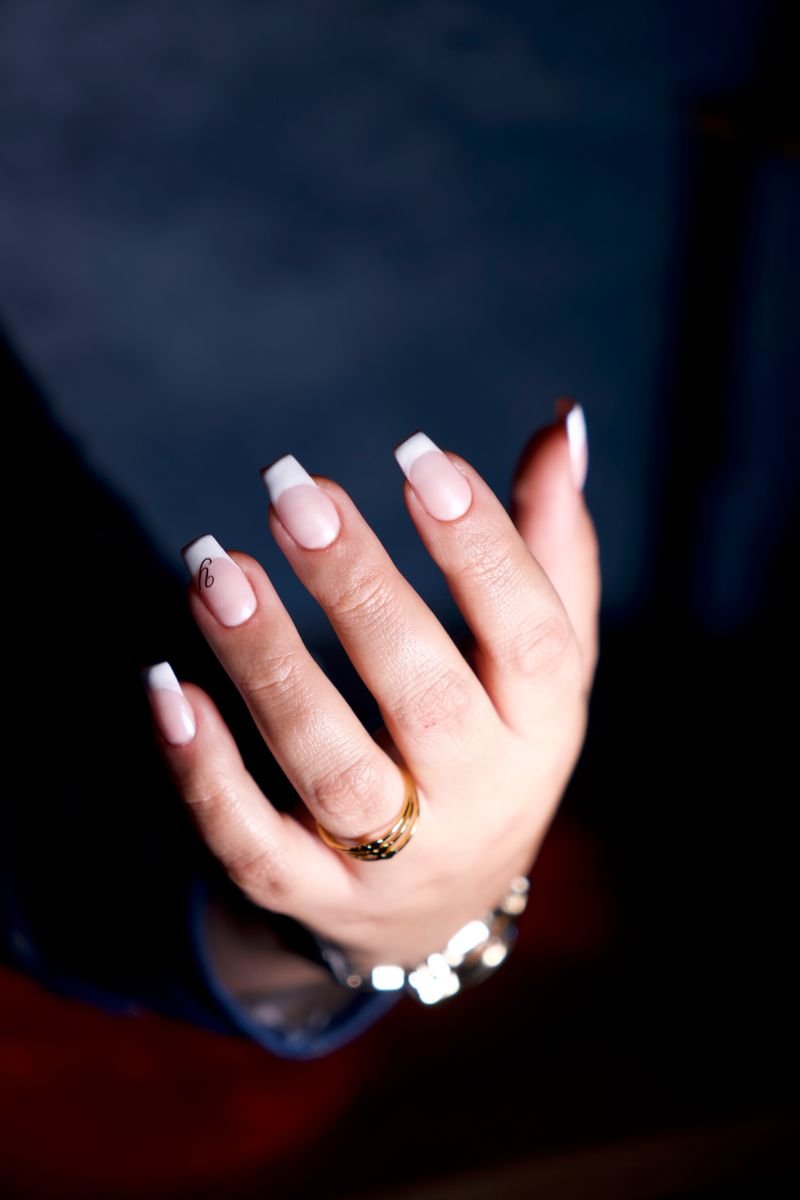
- Classic French tip. The flat edge gives a crisp, even white line. For a cold-weather twist, try our winter French tip nails.
- Color block. Split each nail into two straight halves of different colors.
- Bold red cream. A flat tip and red polish give a sharp vintage look.
- Thin stripes. Straight lines line up with the square edge and look tidy.
- Chrome on the tip only. A metallic band across the flat edge stands out without covering the whole nail.
If you want a long square shape with a tapered body, look at coffin nails, which keep the flat tip but narrow the sides.
Frequently Asked Questions
Do square nails break more than round nails?
Yes, on natural nails they usually do. The two sharp corners take most of the force when you bump or press something, so they chip and split first. Beveling the corners a little or wearing a gel layer helps a lot.
Which nail shape looks more professional?
Short round or short squoval nails look the most professional in most offices. They read as neat and cared for, and they don’t get in the way of typing. Keep the free edge at 1 to 3 mm and choose a nude, pale pink or clear polish.
What is the difference between round and oval nails?
Round nails follow your fingertip and stay short, with a wide, even curve. Oval nails are longer and narrower at the top, shaped more like an egg. Oval needs at least 3 to 4 mm of free edge, while round works at 1 mm.
Is squoval the same as square round nails?
Yes. “Square round,” “soft square” and “squoval” all name the same shape: a flat tip with curved corners. The exact corner size can vary a little between salons, so show a photo if you want sharper or softer corners.
What is the best nail shape for typing?
Short round nails are the best for typing. Your fingertip pads hit the keys, not the nail, and there are no corners to click or catch. Keep the free edge under 3 mm if you type for hours each day.
Can short nails be square?
They can, but very short square nails can look blunt. Aim for at least 3 mm of free edge. If your nails are shorter than that, squoval gives you a similar look without the stubby effect.
Pick the Shape That Fits Your Day
Choosing between round and square nails comes down to how you use your hands. If your hands work hard, file your nails round and keep them short. You will break fewer nails and spend less time fixing chips. If your nails are strong and you love a crisp edge, go square and bevel the corners. When you are stuck in between, squoval gives you a bit of both. Try one shape for 2 weeks before you judge it, since it takes a few days to get used to how your nails feel.